Showing posts with label Ayurvedic-Herbal-Medicinal-Plants. Show all posts

Wednesday, June 24, 2009

Kalalavi | Gloriosa superba | Agnimukhi

Kalalavi (Agnimukhi)

classification of Gloriosa superba

Kingdom: Plantae

Order: Liliales

Family: Colchicaceae

Genus: GloriosaBold
Common name: Malabar glory lily

Nature of Gloriosa superba

it is a climber on the leaves are elongated and their tips are modified as tendril.

this adaptation helps the plant in climbing. the flowers are large, orange red coloured and very attractive.

Special characteristics of Gloriosa superba
Leaf tips modified into tendrils and beautiful showy flowers.

Medicinal uses of Gloriosa superba
The roots and leaves used in snakebite. leaves given to cattle as antiworm treatment.
Colchicine, an alkaloid obtained from the tubers and seeds fetches high price in the market and used in scientific research.


position of Gloriosa superba
vulnerable in the wild.

Kuda | Kutaj | Holarrhena antidysenterica

kuda
Kuda(Kutaj)

Scientific name: Holarrhena antidysenterica

Family: Apocynaceae

Nature of Holarrhena antidysenterica

It is a tall shurb or small tree, evergreen in nature.
leaves are smooth large, ovate in shape; and about 15-31 cms. long and 10 cms. broad.
flowers are cream coloured, fragrant and borne in bunches .
the plant flowers profusely during February-March. fruits are thin and cylindrical, with two follicles attached together at distal ends.


Special characteristics of Holarrhena antidysenterica

Fragrant flowers and twin fruits.

Medicinal uses of Holarrhena antidysenterica

The roots and dried bark of the plant used as antidysentric drug. seeds are used in the treatment of fever and cold.
The plant is considered to be the best remedy for dysentery. the plant used in the ayurvedic preparation "Kutajarishta". it has a laxative property.


position of Holarrhena antidysenterica
Very common.

Helicteres isora | Indian screw-fruit | Murudsheng

Murudsheng (Murgshrung)

Scientific name: Helicteres isora

Common name: Indian screw-fruit

Family: Sterculiaceae

Nature of Helicteres isora

it is a shurb growing around 1.8 meters in height.
the leaves are ovate in shape with a serrate margin.
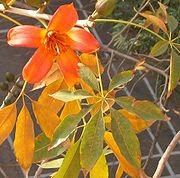
flowers are bright orange-red in colour when young and turn blackish before fruiting. fruits in a pod, five together forming a screw like structure.

location: mostly this plant Found in moist and deciduous forests

Special characteristics of Helicteres isora
Its orange red flowers and screw shaped fruits.

Medicinal uses of Helicteres isora
Fruits used in treating intestinal complaints, colic pains and flatulence.
roots used in diabetes and in convulsions.


position of Helicteres isora
common in moist forests during rainy season.

Gulvel | Tinospora cordifolia | Amruta

gulvel
Gulvel (Amruta)

classification of
Tinospora cordifolia

Kingdom: Plantae

Division: Magnoliophyta

Class: Magnoliopsida

Order: Ranunculales

Family: Menispermaceae

Genus: Tinospora

Species: T. cordifolia

Family: Meni permaceae

Nature of
Tinospora cordifolia

It is a extensive perennial climber with grayish stem and tubercles on the surface.
it gives out hanging roots from the stem. the leaves are broad and heart-shaped.
the plant bears minute yellow flowers on long spikes


Special Characteristics of
Tinospora cordifolia

The stem is gray with tubercles and has bitter test to its exude.

Medicinal uses of
Tinospora cordifolia
The stem dried along with the bark is source of medicine.
It is a bitter tonic, useful in all types of liver problems. It is also given to reduce body heat (kadki).The plant is also useful in the treatment of jaundice.
Important ayurvadic preparation like "
Amrutarishta"and"Gelvelsatva" are obtained from this plant.


position of
Tinospora cordifolia : Common in the wild on trees.

Ashwagandha | Withama somnifera

Ashwagandha (Ashwagandha)

Scientific Name: Withama somnifera

Family: Solanaceae

Nature of Withama somnifera

It is aA erect perennial Herb growing on wasteland.
The stem and branches are covered with minute star-shaped hairs.
The leaves are ovate with acute apex and about 10 cms. long.


Special Characteristics of Withama somnifera
Its beautiful red fruits covered with membranous calyx.

Medicinal uses of Withama somnifera
The drug in the form of alkaloid, is obtained from the dried roots.
it is diuretic in function and used as a tonic for general weakness for all ages.
It is a common ingredient of many ayurvedic health tonics of commerce.

Sariva | Hmidesmus indicus | Anantmool | Indian sarsaparila

anantmool
Anantmool (Sariva)

classification of Hemidesmus indicus

Kingdom: Plantae

Order: Gentianales

Family: Apocynaceae

Subfamily: Asclepiadoideae

Genus: Hemidesmus

Species: H. indicus

Common name: Indian sarsaparila

Nature of Emidesmus indicus
It is a perennial prostrate climber with different shapes of leaves.
rootstocks are fragrant and penetrate deep in the soil.
leaves very greatly in size and shape and opposite in arrangement.
young leaves have whitish midrib.
the flowers are small yellow and purple in colour, borne in umbellate cymes.
fruits with with two follicles and split open when dry.


Special characteristics of Emidesmus indicus
Roots are scented.

Medicianl uses of Emidesmus indicus
Roots are used as diuretic.
It is a well-known plant as blood purifier.
it is also used for improving appetite. young leaves if chewed are refreshing. medicinal preparations like "Raktadoshantak", "Safee" and" Surakta" contain the extract of this plant.
it is also used in ayurvadic and yunani medicine system.

position of Emidesmus indicus: Fairly common in the wild.

Saturday, June 20, 2009

Rui | madar | Calotropis gigantea | Milkweed

Calotropis gigantea
rui(madar)

classification of
Calotropis gigantea

Kingdom: Plantae

Order: Gentianales

Family: Apocynaceae

Subfamily: Asclepiadoideae

Genus: Calotropis

Species: C. gigantea

Common name:
Milkweed, Rui (madar)

Nature of
Calotropis gigantea

A common shurb of wasteland and rode side. the leaves are thick, opposite, decussate in arrangement and coated with white powder. flowers are in umble and blue in colour.

Distribution: Throughout india on plains on wastelands.

Special characteristics of
Calotropis gigantea :
Its typical leaves and flowers, which are quite unique in structure.

Medicinal uses of
Calotropis gigantea :

Dry leaf powder used for treating wounds and boils. leaves found to be effective on elephantiasis.
flowers along with jaggery are useful against cough and improving appetite.
the mixture of latex, turmeric and sesame oil, useful in treating scabies.


Leaves and flowers used for worshiping lord Hanuman.
position : Very common.

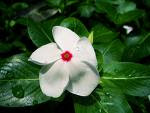
Sadaphuli | Catharanthus roseus | | Periwinkle

image of sadafulli
 Sadaphuli

Sadaphuli

classification of
Catharanthus roseus

Kingdom: Plantae

Order: Gentianales

Family: Apocynaceae

Genus: Catharanthus

Common name: Periwinkle


Nature of classification of
Catharanthus roseus

it is a herb up to one-meter height. leaves are shinning green in clusters. flowers are white or pink in colour.

Distribution: The plant is a native of madagascar, but found throughout india.

Special characteristics of
roseus:
ornamental plant cultivated for its white and pink flowers.

Medicinal uses of Catharanthus roseus:
Roots and leaves are used in medicine. the plant contains alkaloids,which are used in the treatment of tumor, leukemia, hypertension and has a sedative property.

position: Very common; has least risk in the wild.

Halad | Haridra | domestica valenton

Halad(Haridra)

classificaton of domestica valenton

Kingdom Plantae

Division Magnoliophyta

Class Liliopsida

Order Urticales

Family Moraceae

Genus Curcuma

Species Longa

Common name: Turmeric


Nature of domestica valenton
It is a A small herb with long and scented leaves, growing in moist situations. the rhizome is a modified stem, which constitutes turmeric.

Distribution: Found mostly in peninsular india.

Special characteristics of domestica valenton
Its rhizome and leaves.

Medicianl uses of domestica valenton:
The plant contains alkaloid curcumin, used for treating cough and cold.
it is widely used as an antiseptic for clotting blood. turmeric is also used in cosmetic preparations.


position : A common plant under cultivation at various places in india.

Datura stramonium | Dhotra | Kanak

Datura stramonium -dhatura
Dhotra(Kanak)

classification of
Datura stramonium :

Kingdom: Plantae

Order: Solanales

Family: Solanaceae

Genus: Datura

Common name: Thorn apple

Family:
Solanaceae

Nature of
Datura stramonium

it is a herb with lot of branching and large leaves.
flowers are large, white and trumpet shaped.
the fruit is oval in shape, with short prickles all over its surface.

Distribution: Found all over india in plains, especially on wast places.

Special characteristics of
Datura stramonium

Its large flowers; and fruits, which split open when ripe.

Medicinal uses of Datura stramonium

drug consists of dried leaves and seeds.the leaves contain alkaloids hyoscyamine and atropine. the plant is useful in treating bronchitis and asthma, and also has antispasmodic properties.
The plant is used in ayurvedic preparations.


position: Common on waste places, as weed.

Bahava | Suvarnika | Cassia fistula

Bahava(Suvarnika)
Bahava(Suvarnika)

classification of
Cassia fistula

Kingdom: Plantae

Division: Magnoliophyta

Class: Magnoliopsida

Subclass: Rosidae

Order: Fabales

Family: Fabaceae

Subfamily: Caesalpinioideae

Tribe: Cassieae

Subtribe: Cassiinae

Genus: Cassia

Species: C. fistula Cassia fistula

Common name:
Indian laburnum


Nature of
Cassia fistula
it is a medium sized tree with compound leaves.
leaflets larg and shining. flowers are bright yellow and borne in long hanging bunches.
pod is cylindrical and dark brown when ripe.

Distribution: It is found throughout india up to a certain altitude.
common in moist and evergreen forest.

Special characteristics of
Cassia fistula: Beautiful golden yellow flowers in hanging bunch.

medicinal uses of Cassia fistula: Seeds and fruit pulp used as mild laxative. tender leaves juice used in the treatment of scabies.
It's a very good avenue and garden tree.


position: Commonly found in the forest.

Aavla | Amalika | Emblica officinalis

Emblica officinalis-avala
Aavla(Amalika)

classification of Emblica officinalis

Kingdom: Plantae

Division: Flowering plant

Class: Magnoliopsida

Order: Malpighiales

Family: Phyllanthaceae

Tribe: Phyllantheae

Subtribe: Flueggeinae

Genus: Phyllanthus

Species: P. emblica officinalis

Common name: Emblic myrobalan

Family: Euphorbiaceae

Nature of Emblica officinalis

This is a medium-sized deciduous tree, with pimiately compound leaves. it bears a small pale greenish yellow globose shaped fruit, marked with six lobes.

Distribution: Occurs throughout india in plains as well as in coastal districts.

Special characteristics of Emblica officinalis : Its globose fruit, which is larger when cultivated.

Medicinal uses of Emblica officinalis
fruits are s rich source of Vitamin C. it is an effective liver tonic and a mild laxative. it also helps in improving the appetite and digestion. it is one of the main ingredients of "Chavanprash".
The fruit is a great source of Vitamin C and used in ayurvedic preparations.


Status: A commonly occurring plant of deciduous forests.

Wednesday, June 17, 2009

Punarnava | Boerhaavia diffusa | Common hog-weed


Scientific name: Boerhaavia diffusa

Common name: Common hog-weed, Punarnava(Punarnava).

Family: Nyctaginaceae

nature of Boerhaavia diffusa: a herb sperading on ground and partly erect. nodes swoeen, with ovate leaves on both sides. flowers very small and pink coloured, growing in clusters.


characteristics of Boerhaavia diffusa

Entire plant has pink colourations on stem.

Medicinal uses of Boerhaavia diffusa

Leaves and roots have medicinal properties.
the drug contains alkaloid "punarnavin"
.it is diuretic and used in the treatment of drohapsy and jaundice.
An ayurvedic preparation "punarnavasava" obtained from this plan.


status of Boerhaavia diffusa: fairly common.

Asparagus racemosus

classification of Asparagus racemosus

Kingdom: Plantae

Order: Asparagales

Family: Asparagaceae

Genus: Asparagus

Species: A. racemosu

Nature of Asparagus racemosus

It is a shurb.
leaves are small, linear with small stout spnious spur at the base. fruits are globose,3-5mmin diameter and turn bright red when ripe .

characteristics of Asparagus racemosus : This and oters species are used as ornamental plant.

Medicinal uses of Asparagus racemosus : Roots act as diuretic and increas appetite.
the mixture of long pepper, honey and root extract of this plant works as tonic.
It is extensively used in ayurvedic preparation e.g."shatavari kalp".
Cultivated/collected: Collected from wild and also cultivated.

Status of Asparagus racemosus : Fairly common in wild and gardens.

Neerbranhi | Somyalata | Bacopa monnieri

Neerbranhi(Somyalata)


clasification of
Bacopa monnieri

Kingdom: Plantae

Order: Lamiales

Family:
Scrophulariaceae

Genus: Bacopa

Species: B. monnieri

Common name:
Thyme leaves gratiola, Neerbranhi (Somyalata).


Nature

It is a herb with succulent stem and leaves, spreading on moist ground.
The flowers are very small, solitary and bluein colour.
this plant is mostly found near water bodies.


characteristics
Bacopa monnieri: It is a Moderately succulent plant.

Medicinal uses of Bacopa monnieri

every parts of the plant is used medicinally. it is a tonic for nevers and prescribed in mental diseases. the leaf juice is given to infants in bronchitis.
plant countains an alkaloid "
bramhin", which is a cardiac tonic.


position: Common on moist locations.

Kateshever | Red silk cotton | Bombax ceiba | Shalmali

Red silk cotton
Kateshever (Shalmali)


classification of
Bombax ceiba

Kingdom: Plantae

Order: Malvales

Family: Malvaceae

Genus: Bombax

Species: B. ceiba

Common name:
Red silk cotton,Kateshever (Shalmali) .


Nature

it is a tree with its entire bark surface covered with spines.
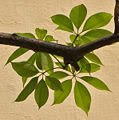
leaves aremostly palmately compound.
flowers are large, leathery and dark red in colour.

characteristics of
Red silk cotton

Beautiful large red flowers and stem armed with strong spines. the fruits contain white silky fibres.

Medicianl uses of
Red silk cotton: Its spines are used as antifugal.
gum is known as "mocharus".

Fruits yield slick cotton, used in stuffing mattresses and pillows.


position: Common in drier as well as coastal parts.

Neem | Azadirachta indica |

Indian Azadiracta Indica-nNeem Image of Azadirachta indica | Neem Tree with leaves

classification of Azadirachta indica | Neem

Kingdom: Plantae

Order: Sapindalez

Family: Meliaceae

Genus: Azadirachta

Family: Meliaceae

Common name:
Neem, kaduneem, mahaneem.

Nature of
Neem tree

It is a tree with straight trunk and compound leaves, with serrated margin.
flower are small and white in colour . fruits are small and elongated and mostly turn yellow when ripe.

Distribution of of Neem tree

cultivated as roadside tree near habitations.

characteristics of
Azadirachta indica | Neem tree

Beautiful canopy of the tree and its leaves.

Medicinal uses of Azadirachta indica| Neem tree

This tree is known as Amrut Vruksha as all its parts are used medicinally. leaves and bark are useful in the treatment of skin problems. oil cake from seeds and gum are also useful. in the medicinal purpose.


position

Fairly common tree throughout the plains in india.

Tuesday, June 16, 2009

Punarnava | Boerhavia diffusa

classification of Boerhavia diffusa

Kingdom: Plantae

Division: Magnoliophyta

Class: Magnoliopsida

Order: Caryophyllales

Family: Nyctaginaceae

Genus: Boerhavia

common name is ghetului, punarnava.

useful part of Boerhavia diffusa;-its seeds, root and leaves are useful.

medicinal uses of Boerhavia diffusa ;-it is useful in inoedema, cardica disorders, liver and spleen diseases.

Sinduri | bixa orellana

 Sinduri-Bixa orellana
SENGERI


clasisification of Bixa orellana


Kingdom: Plantae


Order: Malvales


Family: Bixaceae


Genus: Bixa


Species: B. orellana


common name is sinduri, shengeri.


useful part of Bixa orellana;-its seeds, root, leaves and fruits are useful


medicinal uses of Bixa orellana;-it is useful in astringent,purgative, antipyretic, gonorrhoea and jaundice.

Kanchanar | Baunhinia variegata

kanchanar-bauhinia veriegata

classiication of Baunhinia variegata


Kingdom: Plantae


Division: Magnoliophyta


Class: Magnoliopsida


Order: Fabales


Family: Fabaceae


Subfamily: Caesalpinioideae


Tribe: Cercideae


Genus: Bauhinia


Species: B. variegata


common name is kanchan, kanchanar.


useful part of Baunahina variegata;-its bark and flowers are useful in the medicinal purpose.


medicinal uses of Baunhinia variegata ;-it is useful in anti bacterial and diseases.