Wednesday, September 26, 2012

CATHARANTHUS ROSEUS | SADABAHAR

http://ornamentalplants-adira.blogspot.com/


-->
Kingdom: Plantae


Division: Magnoliophyta


Class: Magnoliopsida


Order: Gentianales


Family: Apocynaceae


Genus: Catharanthus


Species: C. roseus

COMMON NAMES:-sadabahar, nayantara, sadaphal, ainshakti, pillaganneru..etc..
NATURE:- it is a herb with height about 1 meter.
LEAVES:-Leaves are ovate in shape and they are opposite.
FLOWERS:-mostly flowers in axillaries clusters of 2-3,, patals are seems white with pink in colour. And they are throught the years.
FRUITS:-fruits are follicular.
MEDICINAL USES:-mostly drugs contained by this plants roots. Which are mostly known to there toxic properties.for practically it proved that most of animals have show that certain of catharanthus as useful in leukaemia.
This plant is famous for there ornamental planting.

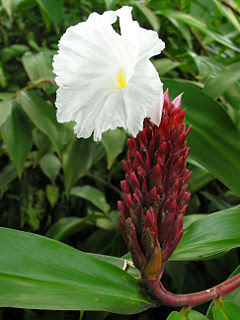
COSTUS SPECIOSUS | KUSHTA

http://ornamentalplants-adira.blogspot.com/
Kingdom: Plantae

Division: Magnoliophyta

Class: Liliopsida

Order: Zingiberales

Family: Costaceae

Genus: Costus

Species: C. speciosus

COMMON NAMES:-kust,pokaramul,penva,keoli,kimuka,chinnkoova.. etc..

NATURE:-it is a herb.

LEAVES:-leaves are mostly big with 12-35 centemeter long.they are mostly without petiole.

FLOWERS:-flowere are white in colour with red bracts.

FRUITS:- fruits are red in colour with black seeds..

MEDICINAL USES OF COSTUS SPECIOSUS(KUSHTA):-Drugs obtained by this plants through

there fresh and dried rhizomes.

roots uses as making for tonic.

roots are also useful in fever.

the rhizomes is comestible later cooking ,which is rich in starch..

Thursday, March 10, 2011

Mondulkiri Protected forest

Mondulkiri Protected Forest

Welcome to Vanny's guide here is the background of the Mondulkiri Protected areas are Started in 2005, The Eastern Plains Landscape (EPL) project, located in northeastern Cambodia, covers 2 protected areas: Mondulkiri Protected Forest (MPF) and Phnom Prich Wildlife Sanctuary (PPWS). Both protected areas are part of the world’s 200 most biologically important eco-regions. Spread over an area of almost 800.000 ha, the EPL contains one of the largest continuous stretch of dry- and semi evergreen forest in South East Asia;

The Mondulkiri Protected Forest was legally designated by a Royal Government of Cambodia Sub-Decree in 2002 for the primary purpose of conserving plant and wildlife genetic resources.

The management of MPF falls within the criteria of IUCN category 2: “National Park: protected area mainly for ecosystem protection and recreation”

WWF has been actively managing the MPF since 2004 in collaboration with the Wildlife Protection Office (WPO) of the Forestry Administration (FA). WWF developed the all-encompassing Srepok Wilderness Area Project (SWAP), which governs all activities undertaken within the MPF.

The remote value of the MPF is significantly high for the region, containing a large amount of undisturbed habitat, an aesthetically attractive river, remote and unique landscapes, forests, and wildlife creating high potential for tourists to visit the area.

The Mondulkiri Protected Forest (MPF) is part of the Lower Mekong Dry Forest Eco-region (LMDFE), which is indicated by WWF as one of the world’s 200 most biologically important eco-regions. The MPF contains a characteristic dry forest mosaic pattern of natural habitats, including several small ponds and wetlands that are embedded in three forest types. This habitat mosaic is globally unique and supports a significant population of globally threatened wildlife species.

The Srepok River that runs through the MPF, is part of the biologically rich Mekong River system and forms a priority landscape within the LMDFE. The Srepok river system is a vital economic and livelihood resource for MPF and the adjacent communities of which many rely solely on the river for domestic water supply, fish consumption and transport.

Most of the trees are of non-commercial value because they are small in diameter and widely spaced. However, the forest contains some luxury timber species, but its patches are often scattered and in remote locations. Local people harvest trees and bamboo for construction and Non-timber forest products, such as resin and sleng seeds, form an important valuable resource.

Vision

The Eastern Plains vision is “to keep Cambodian wilderness intact and connected, helping people protect their wildlife while sustaining livelihoods”. It will contribute to social and economic development in adjacent communities and elsewhere within Mondulkiri Province through sustainable natural resource management and ecotourism accommodation and attractions
The two primary goals of Ecotourism to EPL:


1.    Use Ecotourism as a tool to finance the protection of the EPL
2.    Improve the livelihood of the communities surrounding the EPL
Get more information please contact me by phone or email:
H/P : +855(0)11 351 841
Email: tuonvanny@gmail.com
Vanny's guide


Saturday, March 5, 2011

Emblica officinalis Taxonomy | images | uses | classification

Taxonomy of Emblica officinalis
Family:-Euphorbiaceas.

Emblica officinalis


Common names of Emblica officinalis

Amla , Anola , Avla.

Description and uses of Emblica officinalis
it is found in deciduous forests .
There are two varieties.
One with large fruits
other , small fruits grown in the Deccan.
The fruit is sometimes dried and looks like Supari.
It is very rich in Vitamine C.

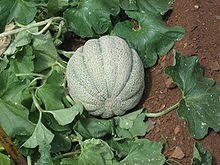
Cucumis melo | Kharbuja | Puttihai |Shendad |Takmak. | uses ,classification with image

Taxonomy of Cucumis melo

Common names of Cucumis melo
English. Melon ;
Marathi. Kharbuja , Puttihai, Shendad ,Takmak.

Cucumis meloScientific classification of Cucumis melo
Kingdom: Plantae
Order: Cucurbitales
Family: Cucurbitaceae
Genus: Cucumis
Species: C. melo
Binomial name Cucumis melo


Description and medicinal uses of plants


A creeping annual, supposed to be native of North-West India,
Cultivated in sandy beds of rivers during the lis season.
The fruit is eaten.

Coffea arabica | Taxonomy | classification

Taxonomy of Coffea arabica
Common names of Coffea arabica
English. Coffee ;
Marathi. Bund.

Scientific classification of Coffea arabica
Kingdom: Plantae
Order: Gentianales
Family: Rubiaceae
Genus: Coffea
Species: C. arabica
Binomial name Coffea arabica


Description and uses of Coffea arabica plant

A small tree ; a native of Abyssinia.
Berries contain 2 seeds each, they are roasted, ground into powder from which a beverage is prepared.
It is a refreshing or stimulant drink.

varieties of TARBUJA and fruits

(1) PANDHRE TARBUJA - Fruit whitish outside, flesh deep or pale rosy red ; best to eat.
(2) SAHEBI TARBUJA - Fruit whitish outside, flesh red. Largely found in the Bombay Market. Keeps for a long time.
(3) KALE TARBUJA -Fruit dark-green outside, flesh deep rosy red; not very good to eat.
(4) SURAI - Fruit long, flesh red and seed reddish.

Citrus paradisi | Grape fruit. | Image

Citrus paradisi
Citrus paradisi

Common name :- Grape fruit.

Scientific classification of Citrus paradisi
Kingdom: Plantae
Order: Sapindales
Family: Rutaceae
Genus: Citrus


A small tree.

Citrus Limon | Lemon | Motalimbu | Jambira | Idalimbu | Jamburi.

Common names
Lemon, Motalimbu, Jambira , Idalimbu, Jamburi.

Scientific classification of Citrus Limon

Kingdom: Plantae
Order: Sapindales
Family: Rutaceae
Genus: Citrus

Description and uses of Citrus Limon tree

A small tree ; rarely grown for fruit; The plant is usd to bud oranges.
The fruit is smaller and rough.
The juice the fruits are sometimes used for making pickles.

Citrus aurantifolia | Fruit tree

Citrus aurantifolia

Family.—Rutacese.

Common names of Citrus aurantifolia.
Khatalimbu, Lebu , Limbe ,Kagdi Limbn.

Citrus aurantifolia is small tree .
for cultivation it occupies about 2,500 acres area.
The fruit is small and round.
It is used for making pickles, and the juice is used for adding taste to salads.

Citrus medica garden plant | image(picture) | Taxonomy and classification

Citrus medica garden plant
Citrus medica garden plant | image(picture) | Taxonomy and classification


Scientific classification of Citrus medica

Kingdom: Plantae
Order: Sapindales
Family: Rutaceae
Genus: Citrus
Species: C. medica
Binomial name Citrus medica


Common names of Citrus medica


English- Citron;
Gujrati. Bijoru;
Hindi. Turanj ;
Marathi- Mahalunga.

Description and uses of Citrus medica Tree


Citrus medica a small tree.
The fruit is large, skin warty and rough and the rind very thick.
The pulp is bitter and acidic, pale-white in colour.
The fruit is used for pickles and preserves.

Friday, March 4, 2011

Fruit tree Citrus grandis | Taxonomy of Papnas.

Fruit tree Citrus grandis
Family — Rutacese.

Common names of Citrus grandis
English. Pomelo ;
Gujrati. Popnas;
Marathi. Papnas.

Description and uses of Fruit tree Citrus grandis
Citrus grandis is Fruit Trees with A round headed bushy tree, a native of Malaya.
It occupies about 3000 acres to Cultivate.

varieties of Fruit tree Citrus grandis
  1. Red or rose flesh
  2. White flesh.

The former is very popular and sweeter than the latter.
An inter¬mediate variety with pink flesh is occasionally found.
The fruit is eaten along with sugar or salt and is much relished.

Taxonomy of Cicca acida tree | Country gooseberry | Amla | Harparauri | Kirnelli | Rai-amba.

Taxonomy of Cicca acida

Family.—Euphorbiaceas.

Common names of Cicca acida
Country gooseberry , Amla , Harparauri ,Kirnelli , Rai-amba.

Description and uses of Cicca acida tree


A small tree.
Cultivated in gardens .
It bears fruits twice a year—once in April-May and again at the end of rains.
The fruit is extremely sour and is usually eaten cooked with sugar.
It is also made into pickle.

Chrysophyllum cainito | Star-apple | Taraphal.

Taxonomy of Chrysophyllum cainito

Scientific classification of Chrysophyllum cainito
Kingdom: Plantae
Order: Ericales
Family: Sapotaceae
Genus: Chrysophyllum
Species: C. cainito
Binomial name :-Chrysophyllum cainito

Common names of Chrysophyllum cainito
Star-apple , Taraphal.

Description and uses of Chrysophyllum cainito plant

A medium sized evergreen tree.
They are also planted in gardens .
The fruit is slightly larger than a Chiku fruit and when cut open shows 8 to 10 compartments arranged like a star (hence the name star-apple).
It contains small amount of sugar and is not much relished.

varieties of Artocarpus integra

Artocarpus integra

Family .—Moraceas

Common names:- Jack Fruit Tree , Vanas , Chakki ,Halasu , Phanas.

A large evergreen tree.

varieties of Artocarpus integra

  1. Barka—pericarp is easily opened with soft pulp succulent bracts and is eaten when fresh.
  2. Kapa-pericarp is hard to open with firm pulp and keeps longer. The fruit is used as a vegetable when green. When ripe, pulp is eaten.
  3. Seeds when roasted are very palatable and nutritious.

Artocarpus communis | Bread Fruit | Bhajicha Phanas | Bhakarlehe

Artocarpus communis
Family—Moracea

Common names :- Bread Fruit , Bhajicha Phanas , Bhakarlehe

Tree with huge polished green leaves.

Annona cherimola | Marutiphal | Hanamphala.

Taxonomy of Annona cherimola
Scientific classification of Annona cherimola

Kingdom: Plantae
Order: Magnoliales
Family: Annonaceae
Genus: Annona
Species: A. cherimola
Binomial name :-Annona cherimola

Common names of Annona cherimola
Marutiphal, Hanamphala.

Description and uses of Annona cherimola

Annona cherimola A small tree .
There are some trees growing in those Gardens at present.
The fruit is large, green, round, oblong or heart-shaped with pitted rind.
It is very delicious..

Carica papaya | Papai | Papita | Pangf.

Carica papaya's taxonomy
Scientific classification of
Carica papaya

Kingdom: Plantae
Order: Brassicales
Family: Caricaceae
Genus: Carica
Species: C. papaya
Binomial name :-Carica papaya

Common names of Carica papaya:
Papai , Papita ,Pangf.

Description and uses of Carica papaya plant
Papayas can be used as a food, a cooking aid, and in medicine.
The stem and bark are also used mostly in rope production.

Borassus flabellifer | Palmyra Palm | Tad

Scientific classification of Borassus flabellifer
Kingdom: Plantae
Order: Arecales
Family: Arecaceae
Genus: Borassus
Species: B. flabellifer
Binomial name:-Borassus flabellifer


Common names of Borassus flabellifer

English name.:-Palmyra Palm;
Gujrati name:- Tad;
Hindi name. Tad;

Description of Tad

A large erect palm. Cultivated and self sown in the districts of the State.
The unripe seedTad-gola are eaten during the hot weather. They are cooling
Inflorescence is tapped for toddy which is fermented and it HI
liquor.

Averrhoa carambola | Carambola Apple | Coromondal | Kirahulli | Kamarakh.

Scientific classification of Averrhoa carambola
Kingdom: Plantae
Order: Oxalidales
Family: Oxalidaceae
Genus: Averrhoa
Species: A. carambola
Binomial name :-Averrhoa carambola

Common names
Carambola Apple, Coromondal , Kirahulli , Kamarakh.

Description about Averrhoa carambola
A small tree grown in gardens throughout the State.
The fruit is remarkably handsome of the size of a lemon.
well as a very fine and peculiar flavour.
It is acidic and unfit In heaten raw.
It does not bear cooking well as it then becomes horny.
The pulp affords a very delicious jelly.